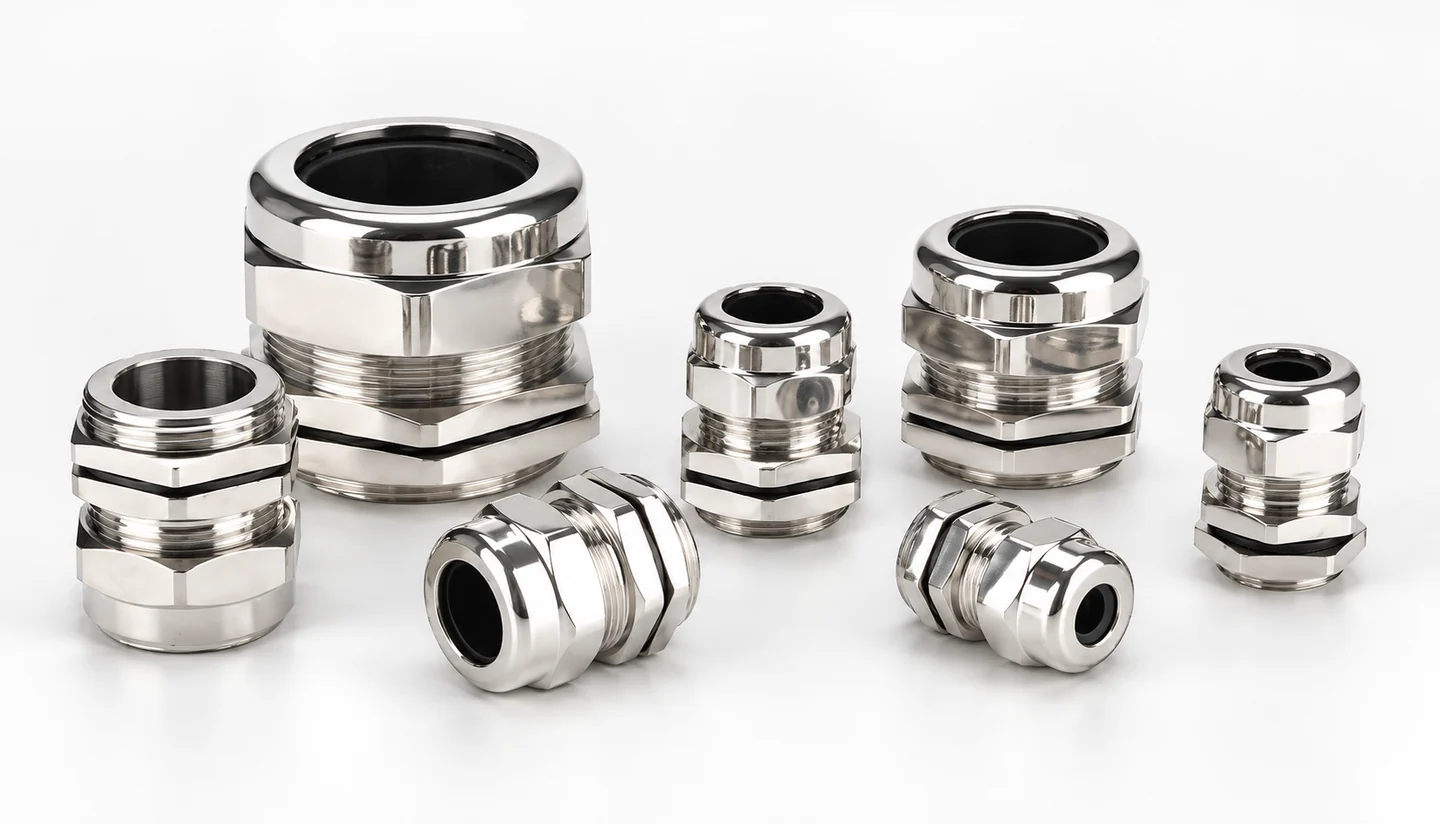
When buyers search for a cable waterproof connector, they may mean an inline electrical connector or a cable gland fitted at an enclosure wall. Those parts do different jobs. A cable gland secures a cable where it enters equipment and, when the selected gland and installation are suitable, helps preserve the enclosure’s specified ingress protection. It does not replace the electrical contacts inside a connector.
Start with the cable, not the thread
The cable’s outside diameter is a key selection input because the gland’s clamping range must fit the actual cable. A gland that is too large may not compress its seal as intended; one that is too small can make assembly difficult or damage the cable. Record the cable diameter from its datasheet, then verify the range against the chosen gland’s own selection table.
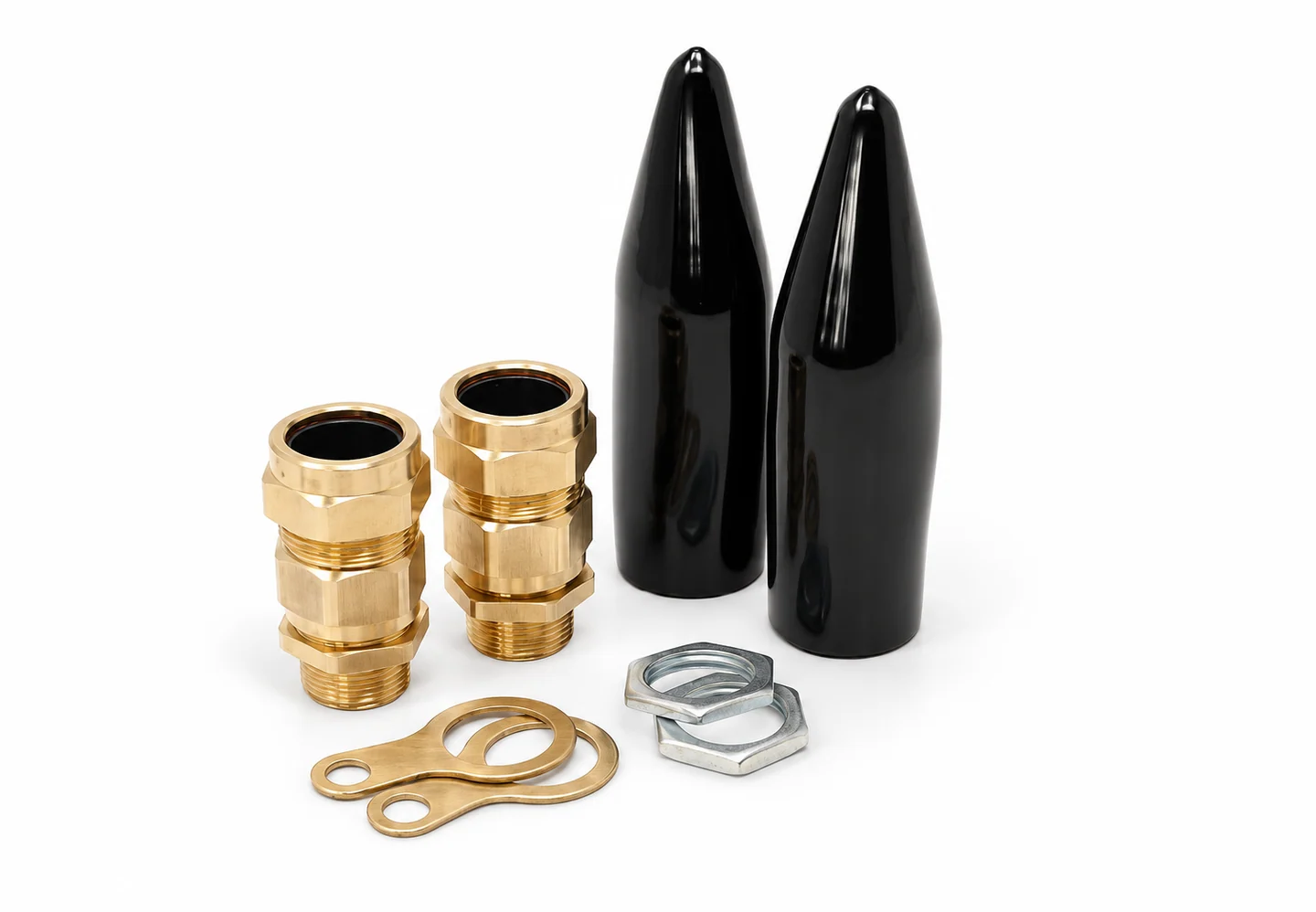
Identify whether the cable is armoured
Armoured and unarmoured cables need different gland configurations. For an armoured cable, provide the armour type and material, the outer diameter, and—where the selected design requires it—the diameter beneath the armour. The gland may also need to provide an armour termination or earth continuity. These requirements depend on the cable construction, electrical design and applicable installation rules; confirm them with the project specification.
For an armoured cable installation, ask for an armoured cable gland and include the cable details in the enquiry. The phrase alone does not identify the armour type, termination method or sealing arrangement.
Match the entry thread and enclosure opening
Confirm the thread standard and size, such as metric or NPT where applicable, and whether the enclosure opening is threaded or unthreaded. Also check the panel thickness and available clearance for the locknut, washer and any required accessories. A correctly sized cable seal cannot compensate for a mismatched enclosure entry.
Read the IP claim as a system requirement
IEC 60529 defines the IP Code used to classify degrees of protection provided by electrical enclosures. A rating printed on one component should not be treated as a blanket rating for every assembled installation. The enclosure opening, thread interface, sealing washer, cable diameter, installation method and product variant can all affect the final result. Confirm the test basis and conditions on the exact product datasheet and use the manufacturer’s installation instructions.
For example, LAPP describes a cable gland’s clamping range as the cable diameter interval needed to achieve strain relief and the specified IP protection. Its guidance also directs buyers to the specific product information. Treat the IP68 connector wording in a search query as a requirement to verify, not as proof that every gland or cable-entry assembly is IP68.
Choose material for the environment
Consider exposure to moisture, dust, outdoor weather, chemicals, vibration and corrosion, along with the enclosure material. Brass, stainless steel and nylon products are not interchangeable in every installation. State the environment and any required finish or material so the supplier can identify a suitable series. If the project specifies a protection rating or certification, ask for documentation tied to the exact model and configuration.
Prevent sealing problems during installation
Follow the gland manufacturer’s assembly instructions and tightening guidance. Over-tightening can damage a cable or sealing component; under-tightening can leave the seal ineffective. For armoured cable, check that the armour is prepared and clamped as the gland design requires. After installation, inspect the entry and confirm that all accessories, seals and locknuts are in the intended positions.
What to send a waterproof gland connector supplier
A useful RFQ gives the supplier enough information to check product fit without guesswork. Include:
- Cable type, construction and outside diameter
- Armour details and any relevant dimensions beneath the armour
- Enclosure material, opening type, thread standard and size
- Required ingress protection and the installation environment
- Material, finish, quantity, destination market and any required documents
Buyers comparing a waterproof cable gland connector should ask for the datasheet, dimensional drawing, clamping range and installation instructions for the proposed model. If the application needs a tested IP level, request evidence that covers the relevant product configuration and installation conditions.
Quick selection checklist
| Input | What to verify |
|---|---|
| Cable | Outside diameter, construction and armour type |
| Enclosure | Thread, opening, panel thickness and material |
| Environment | Water, dust, corrosion, chemicals and vibration |
| Protection | Exact IP requirement, test basis and assembly conditions |
| Installation | Seal position, accessory compatibility and tightening method |
Questions buyers often ask
Is a cable gland the same as an electrical connector?
No. A cable gland secures and seals a cable at an enclosure entry. An electrical connector joins conductors or circuits. Some products combine cable-entry and connector functions, so buyers should name the part and application clearly.
Can I select a gland from the thread size alone?
No. The cable diameter and construction must also match the gland’s clamping range and design. For armoured cables, additional dimensions and termination requirements may apply.
Does “waterproof” automatically mean IP68?
No. Use the exact IP rating and conditions stated for the specific product and assembled installation. IEC 60529 is the standard reference for enclosure IP classifications; the product datasheet and installation instructions define what was evaluated.
Technical references: IEC 60529: Degrees of protection provided by enclosures; CMP Products: selecting the correct cable gland and accessories; CMP Products: cable gland functions; LAPP: cable gland clamping range and IP protection.